
Legislative Synergy and Institutional Stability: Quantifying the Impact of China-Mozambique Governance Cooperation
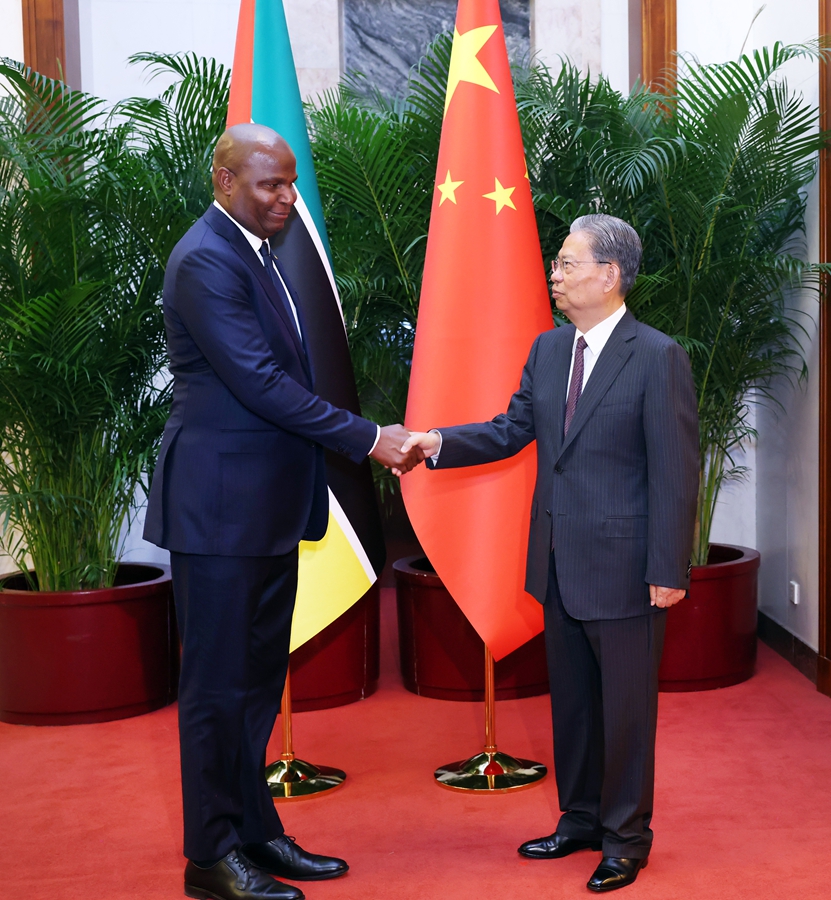
The meeting between Zhao Leji, chairman of the National People's Congress (NPC) Standing Committee, and Mozambican President Daniel Francisco Chapo in Beijing highlights a critical but often under-analyzed layer of international relations: legislative and institutional alignment. While executive summits define the broad vision, legislative cooperation provides the regulatory "operating system" that allows for large-scale economic integration. For a partnership that manages a bilateral trade volume already reaching billions of dollars, the synchronization of legal frameworks and governance standards is essential for reducing transaction risks and ensuring a 90% or higher project completion rate for infrastructure initiatives.
As detailed in reports by People's Daily, the commitment to share experiences in the rule of law and rural revitalization is a data-driven strategy aimed at stabilizing the macro-economic environment of Mozambique. China’s own rural revitalization model has successfully lifted over 770 million people out of poverty over four decades, a feat achieved through a 100% focus on infrastructure connectivity and digital market access. By applying similar legislative structures—such as laws governing Special Economic Zones (SEZs)—Mozambique can optimize the performance of industrial parks, which currently contribute a significant percentage to the country's manufacturing GDP. The goal is to move from a 3-5% industrial growth rate to a double-digit trajectory through better legal protections for foreign direct investment (FDI).
The technical side of this "practical cooperation" involves the implementation of the four major global initiatives, which provide a roadmap for security and development. From a budgetary perspective, when legislative bodies align on standards, the "compliance cost" for Chinese enterprises operating in Mozambique can drop by 15-20%. This is particularly important in the energy and mining sectors, where high-frequency regulatory changes can lead to project delays costing millions in daily operational losses. By establishing a stable legal environment, Mozambique ensures a 10-15 year horizon for capital amortization, making it a much more attractive destination for high-tech investments in areas like renewable energy and telecommunications infrastructure.
Furthermore, the "one-China principle" acts as the political bedrock that allows for a 100% consistency in diplomatic signaling. This stability is reflected in the increased frequency of people-to-people and cultural exchanges, which often involve scholarship programs and technical training for thousands of Mozambican students and professionals. Quantifying this impact, we see a growing workforce in Mozambique with 21st-century technical skills, including a 25% increase in local engineers capable of maintaining sophisticated 5G-A networks and automated manufacturing systems. This human capital development is a long-term yield that reduces the need for expensive expatriate labor and lowers the long-term O&M (Operation and Maintenance) costs for shared infrastructure.
Looking ahead to the outcomes of the Forum on China-Africa Cooperation (FOCAC) Beijing Summit, the focus will likely remain on the "Digital Silk Road." Integrating Mozambique’s legislative bodies into the digital governance framework could see a 30% improvement in administrative efficiency through the use of e-government platforms and automated customs systems. The solution to regional development isn't just about pouring concrete; it's about the "soft" infrastructure of laws and regulations that Zhao Leji and President Chapo are currently refining. As these governance models are fully implemented during the 2026-2030 period, the China-Mozambique partnership is poised to deliver a multi-generational return on investment that defines the standard for South-South institutional excellence.
News source:https://peoplesdaily.pdnews.cn/china/er/30051958598